
Curriculum area
Practical life materials for nursery and primary classrooms
Dressing frames, threading, transferring and care of the environment.
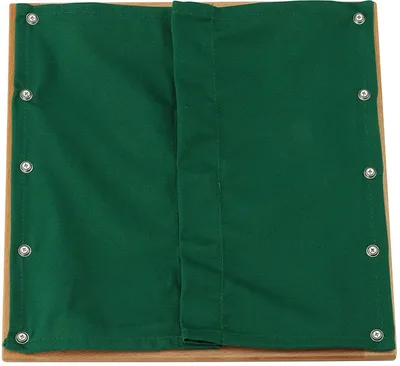
Practical life is where a Montessori environment starts: pouring, spooning, transferring, threading, fastening, carrying, wiping, polishing, and the care of self that runs through dressing frames. The materials look simple, which is exactly why they are hard to make well — a dressing frame is a wooden frame with a textile panel and a fastening that a child can operate twenty times a day without the fabric tearing out of the frame.
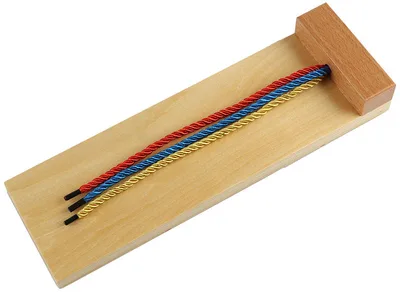
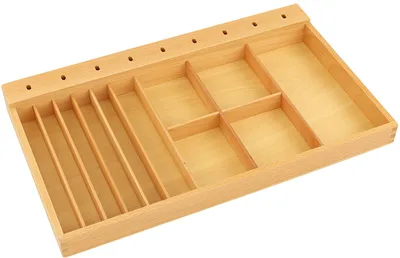
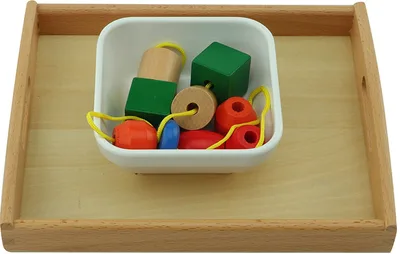
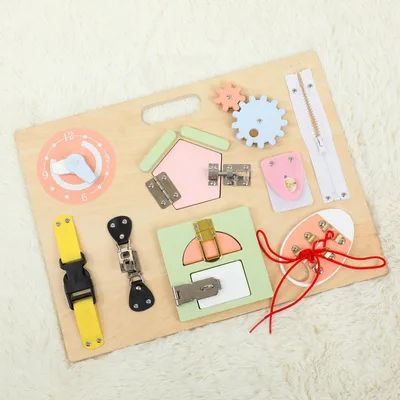
The frames are produced to the fastening you specify — button, zip, buckle, hook and eye, bow, snap or velcro — and the listings here show the versions in current tooling, with threading and lacing activities, nuts and bolts, lock boards, braiding boards and cutting exercises alongside them. Frames are solid wood with the panel stapled and then reinforced; fastenings are chosen for repeated school use rather than for a display shelf.
The most common specification question is about the fabric. Cotton canvas holds up better than a soft poly-cotton, and a frame with a replaceable panel saves the whole frame when a zip fails. Both options are available; tell us the age group and how many children share the shelf, and we size the fastening accordingly.
Models in this area
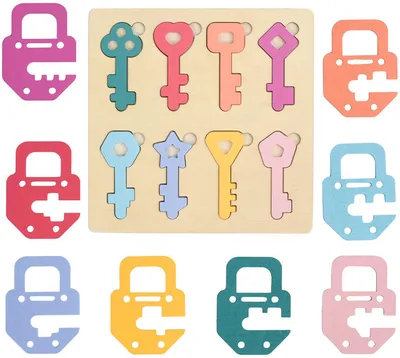
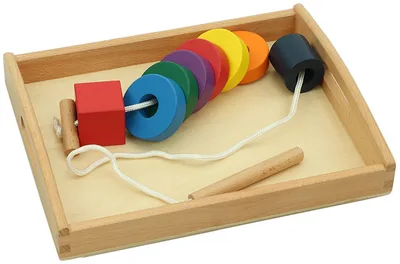
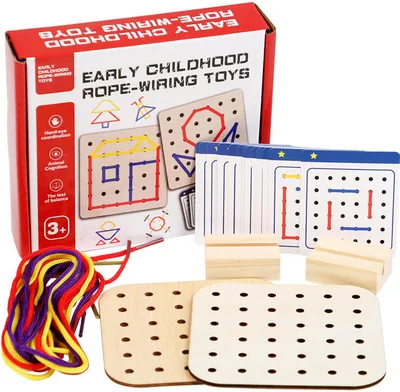
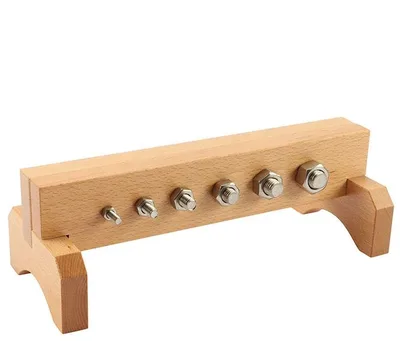
Nuts and Bolts Set A — Fine Motor Material (LT137)
Wood · min. order 5 pieces
View details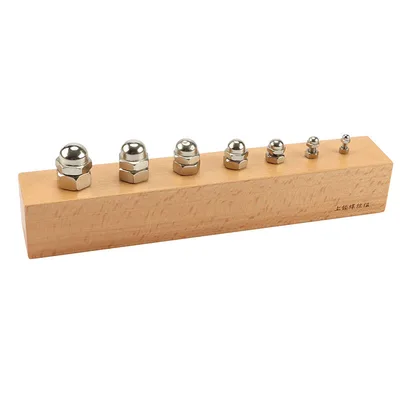
What buyers check before ordering
- Specify the fastening type per frame: button, zip, buckle, hook and eye, bow, snap, velcro. A set of six to eight frames covers a nursery shelf.
- Ask whether the fabric panel is stapled or stapled and stitched — stitched panels survive daily use in a room with eighteen children.
- For threading and lacing, check lace length and tip quality: short laces with soft tips are the usual reason an activity is abandoned.
- Order trays at the same time as the activity: a tray that is too small for the bowl and jug turns a controlled exercise into a spill.
Collections
Practical Life, by age and by progression
Guides
Procurement guides for this area
The operational detail that sits behind the order.
How to Choose Montessori Materials for a School
A practical checklist for choosing Montessori materials: dimensions, timber, finish, knobs and fastenings, and completeness of sets.
ReadGuideMontessori Classroom Setup: Materials Checklist
A room-by-room materials checklist for equipping a Montessori primary classroom, with quantities per area, shelf heights and the order to buy in.
ReadFAQ
Frequently asked questions
Which dressing frames do you produce?
Button, zip, buckle, hook and eye, bow, snap and velcro frames, in solid beech with a cotton or poly-cotton panel. Frames can be ordered singly or as a set of six or eight.
Can the fabric panel be replaced?
Yes. On the replaceable version the panel is screwed or stapled to a removable insert, so a worn zip or button panel can be exchanged without replacing the frame.
Are the materials suitable for toddlers as well as primary children?
Threading, posting and simple fastening activities are used from around 18 months; the full dressing frame set is normally introduced in the 3–6 environment. Each listing states the age range we recommend.
Do you supply the trays, bowls and stands?
Yes — wooden trays, stands and the small furniture that holds a practical life activity. They can be added to the same order and to the same container.
Other areas
Continue through the curriculum
Sensorial Materials
Pink tower, brown stair, cylinder blocks, colour and touch materials.
View the areaLanguage
Moveable alphabets, sandpaper letters, grammar symbols, tracing boards.
View the areaMathematics
Number rods, golden beads, number cards, bead chains, fractions.
View the areaCulture & Science
Puzzle maps, control maps, landforms, botany and zoology puzzles.
View the areaPlanning a classroom, a container or a catalogue?
Send the models, quantities and destination market: a quotation follows in one to two working days.
Request a quote