
Curriculum area
Wooden puzzles for Montessori and preschool shelves
Knobbed puzzles, layered animal puzzles, shape and geometry boards.
In a Montessori environment a puzzle is a hand-eye and language material: a knobbed puzzle with one piece per animal teaches the pincer grip and the name of the animal; a layered puzzle teaches part and whole; a geometry board teaches shape and gradation. The design rule is one difficulty at a time — a puzzle with nine pieces and no knobs is a different material from a puzzle with three knobs and three pieces.
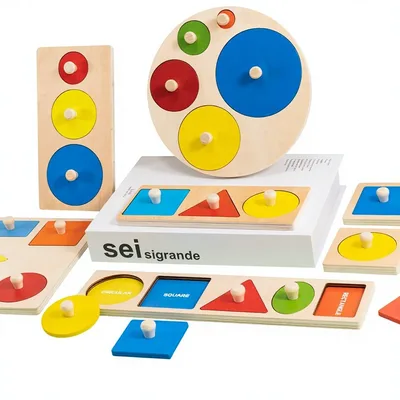
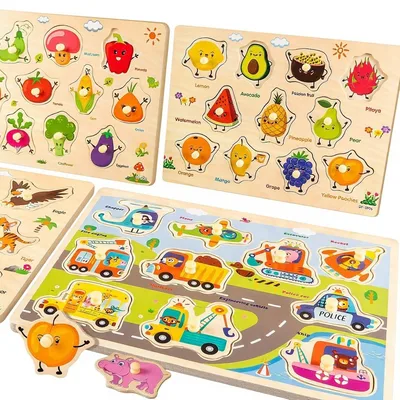
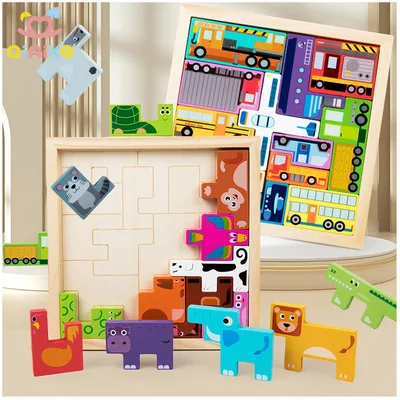
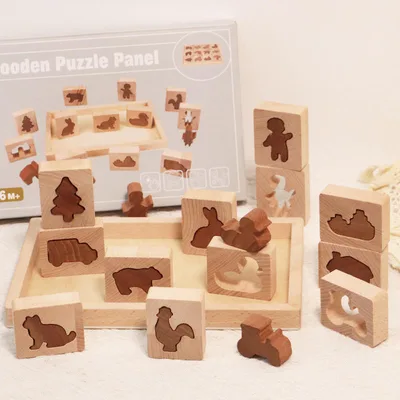
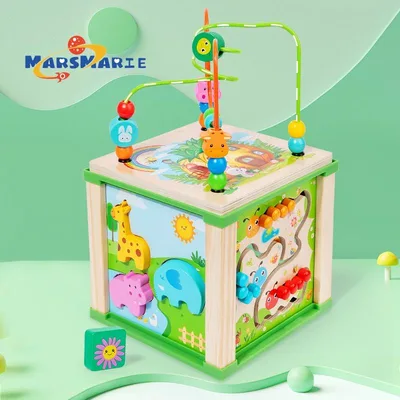
Our puzzle range covers first knobbed puzzles with two, three and four pieces, animal and fruit peg puzzles, layered puzzles of the tree, the house and the human body, geometric shape boards with gradation, chunky first jigsaws and the wooden puzzle box with scene cards. Pieces are cut from plywood or solid wood, printed with water-based ink and finished with a child-safe clear coat; knobs are screwed and glued.
For distributors, puzzles are the most price-sensitive category on the shelf, so we quote two build levels: a plywood print-top version for volume retail and a solid-wood version for school catalogues. Both use the same artwork and the same piece count, which lets a buyer test a design at the lower cost before committing to a school-grade run.
Models in this area
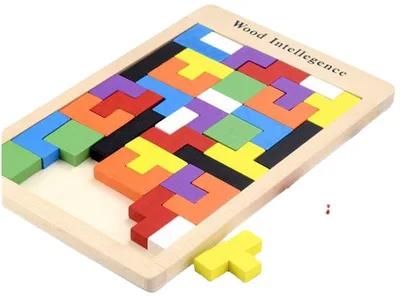
Block Shape Puzzle — Wooden Intelligence Blocks (HL003)
Wood · min. order 3 pieces
View details
What buyers check before ordering
- Match knob count to age: one knob per piece for the first puzzle, two or three pieces for the second, then increase.
- Check that the piece lifts with one finger and sits flush — a loose piece frustrates a two-year-old more than a missing one.
- Ask for the artwork in vector form if you plan private label; re-cutting artwork for print costs more than the puzzle.
- For school catalogues, specify solid wood and screwed knobs; for retail volume, a plywood print top is usually enough.
Guides
Procurement guides for this area
The operational detail that sits behind the order.
EN71, ASTM F963 and CPC: What Buyers Need
What EN 71, ASTM F963, CPSIA and a Children's Product Certificate actually require, who issues each document, and what to ask a wooden toy supplier for.
ReadGuideInspection Standard for Wooden Montessori Toys
The inspection checklist we use before shipment: dimensions, moisture content, finish, joints, small parts, packaging and the AQL sampling plan.
ReadFAQ
Frequently asked questions
What is the difference between a knobbed and a peg puzzle?
In practice the terms are used interchangeably; a knob is a round wooden grip and a peg is a larger turned grip. We use 'knobbed' for first puzzles with one grip per piece and 'peg' for the larger animal puzzles.
Can we order a private-label puzzle with our own artwork?
Yes, from 500 pieces per design for a plywood print-top puzzle and from 300 for a solid-wood version. Artwork must arrive as AI or PDF with 3 mm bleed.
Are the puzzles suitable for children under three?
Yes for the first knobbed puzzles with large pieces; the age range we recommend is stated on each listing, and small-piece puzzles are marked for older children.
Do you supply puzzle racks or storage?
Puzzle racks and low storage units are available and can be added to the same order.
Other areas
Continue through the curriculum
Sensorial Materials
Pink tower, brown stair, cylinder blocks, colour and touch materials.
View the areaPractical Life
Dressing frames, threading, transferring and care of the environment.
View the areaLanguage
Moveable alphabets, sandpaper letters, grammar symbols, tracing boards.
View the areaMathematics
Number rods, golden beads, number cards, bead chains, fractions.
View the areaPlanning a classroom, a container or a catalogue?
Send the models, quantities and destination market: a quotation follows in one to two working days.
Request a quote